
While imagining the world where “Sci-Fi Girl” lives, a few things come together quickly. The world is post-civilization and Earthlike, though not necessarily apocalyptic. Perhaps it is Earth in some alternate form. Some cataclysmic sequence of untold events led to the rapid destabilization of food supplies, power grids, and medicine. Humanity killed itself efficiently with hubris, bypassing the need to fire weapons or drop bombs. Crumbling books and history by oral tradition are all that remains of the old world. Bits of working technology still exist. For those who possess skills needed to coax them back into working-condition, these relics become an overwhelming advantage over those who do not.
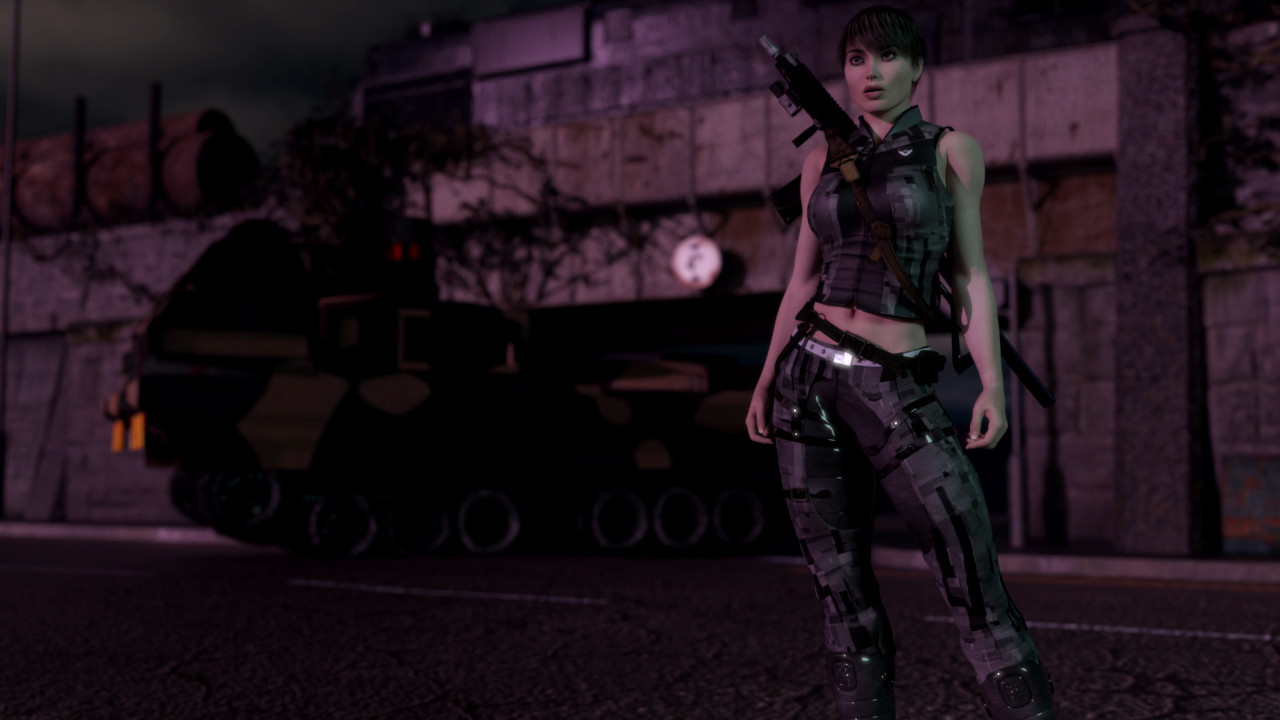
“Sci-Fi Girl” now officially has a name, “Cedar”. She is one of those who have a natural knack for understanding old-world technology. Her world and the events that will come to pass find inspiration from a book I read as a kid titled Heiro’s Journey, with a bit of Damnation Alley mixed in as a nod to my favorite author. Cedar’s story begins many centuries after the end of the “Information Age” and the fall of civilization. It is a “dark age” similar to that which followed the fall of Rome in 476 AD. Some technology has been retained, but the capacity for cities, states, and nations to feed and defend their populace has vanished. People have returned to living in tribes and villages. The human population has eroded from eight billion to just a few tens of millions. Those who remain have re-learned how to fend for themselves.
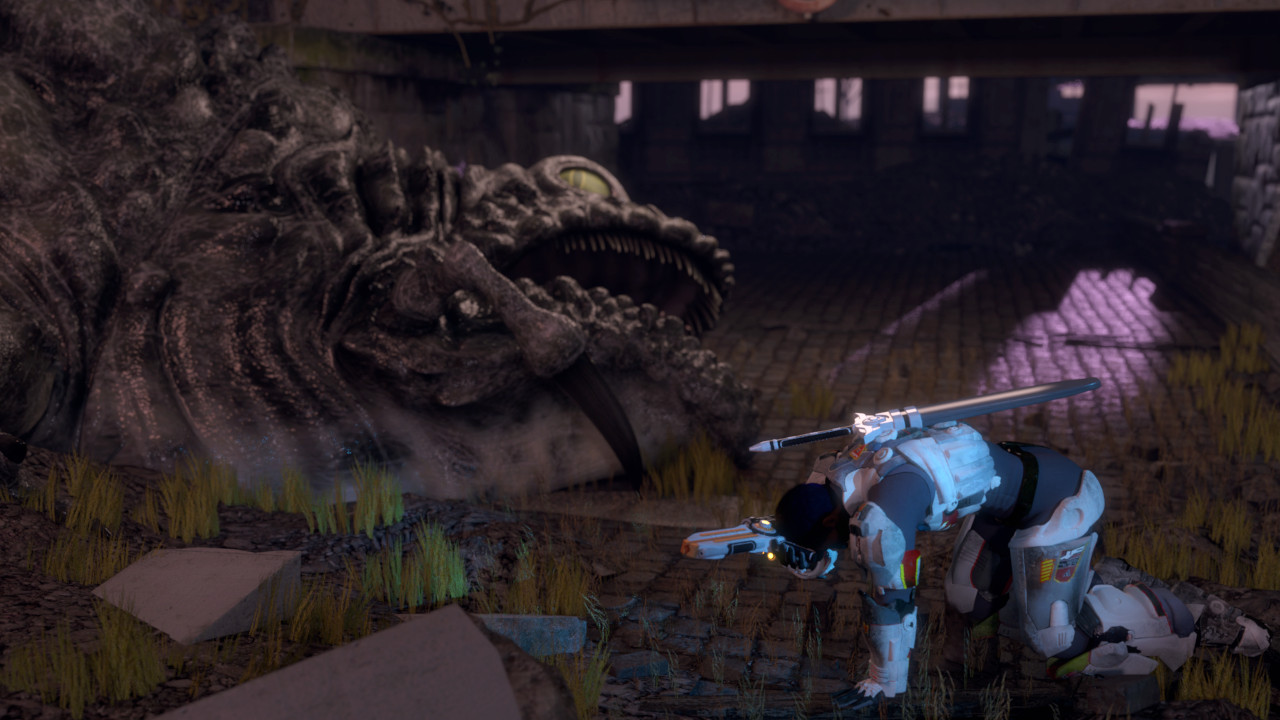
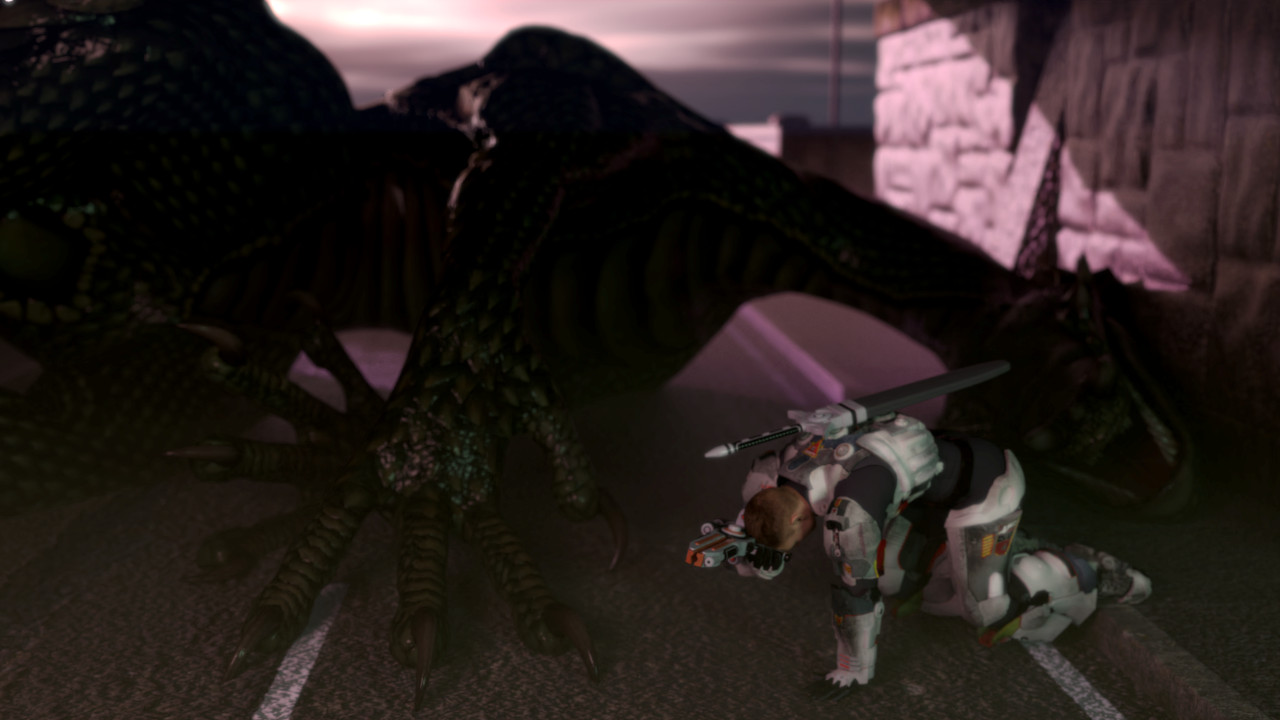
I also realized that Cedar’s world would be low-fantasy. People do not possess magic or superpowers. However, we will be introduced to the emergence of a significant sensory ability in some humans in Cedar’s world. Advanced technology exists, but the skill needed to operate and maintain it has mostly been lost to time. The world has no magical beasts or heavily mutated creatures. Still, I wanted to create an exotic environment where traveling through the hinterlands is risky, and venturing into the wilderness is outright dangerous, if not suicidal. Having studied the history of Florida, I marveled at some of the drawings of alligator hunting made by the local indigenous peoples before Europeans arrived. Some of these beasts were many times larger than modern-day alligators. Nature has similarly reclaimed much of Cedar’s world. Wildlife predators, having no natural enemies to cull their numbers, have grown into enormous beasts. They rarely are seen inside the ruins but roam freely inside the deep wilderness.
Cedar lives in a tiny, dying village populated mostly by women. It has become infamous to the locals for its opposition to enforced reproduction. She is one of three adults still young enough to bear children. The few remaining elders recognize the hopeless situation and have instructed the youth to find new villages willing to accept them. Two of the three, a mating pair with an infant, have agreed to join the nomads when they pass through the area again. Cedar is reluctant to do so. The nomadic people live off the land and seem disinterested in tools and machines left behind by the old world. They are staunch in their beliefs and punish dissension harshly. Mandatory reproduction is accepted as necessary to keep the clan strong and avoid a scenario where it dies out in the same way Cedar’s own village has withered.
Cedar is an adventurer at heart and sees no obligation to produce children. It is an unpopular perspective in this world and is considered haughty and irresponsible by some. So rather than spending time to find a new village, she combs the ruins by day, searching for relics of the past. As she returns home after patrol, Cedar is greeted by an impressive and terrifying sight. Aside from the nomads and the people in her tribe, she has never seen another human. And she has seen the large predators from afar, but never one this close. It is a situation unlike any she has ever had to deal with before today.



 Stories by Zoxell